Winningen-Mosel Cruise Port
Germany
 Germany
Port
Local time


CloudWeather


12° 7°High / Low (°C)


Cruise ships in Winningen-Mosel right now
Updated 18 minutes ago
0 ships in port
| Ship | Cruise line | Status |
|---|---|---|
Winningen-Mosel cruise port timetable: arrivals & departures
Winningen-Mosel cruise schedule, October 2026
THURSDAY 1 OCTOBER 2026 - SATURDAY 3 OCTOBER 2026
No ships are scheduled on this date
Sailing to Winningen-Mosel?
Track and plan your cruise, port by port.
Or download the app


About Winningen-Mosel cruise port
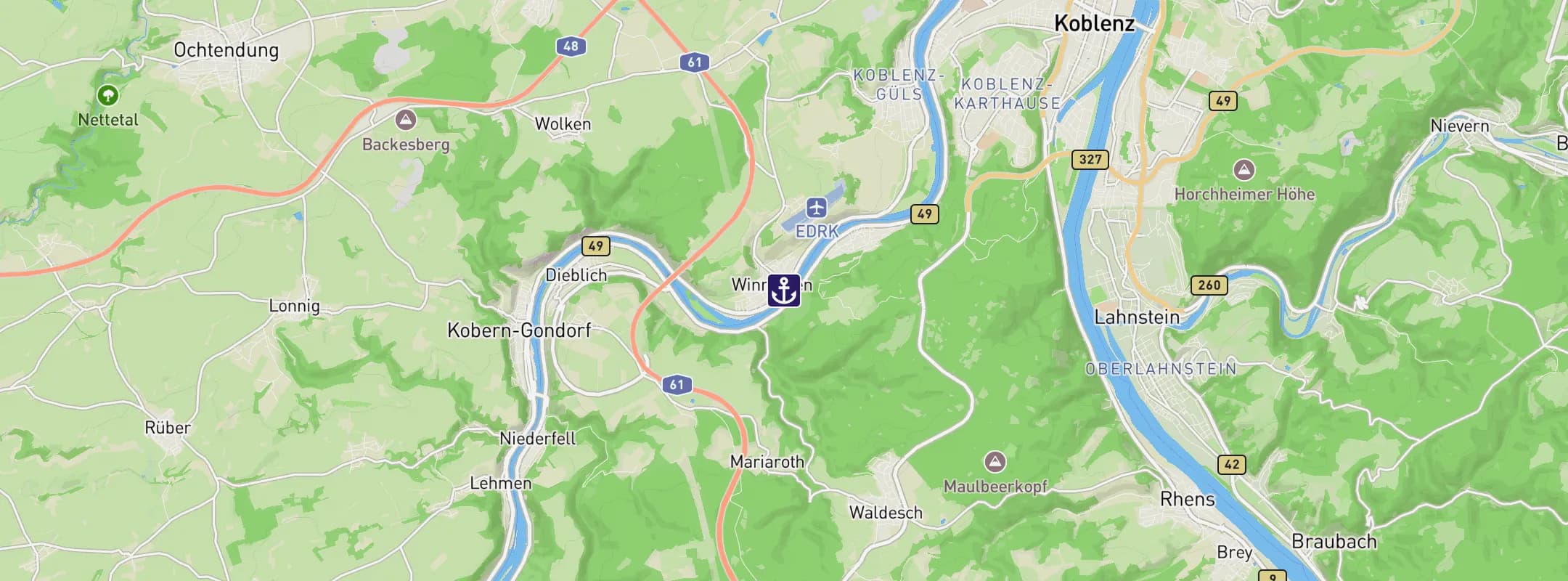
Winningen-Mosel is a small Moselle River cruise port and wine village in Rhineland-Palatinate, close to where the Moselle meets the Rhine at Koblenz. The village lies among the steep vineyards of the Terrassenmosel, or Terrace Moselle, a lower section of the river valley known for its narrow landscape and dramatic vineyard terraces. For cruise passengers, the appeal is the setting as much as the village itself, with the river, vineyards and traditional streets all close at hand.
Wine is central to Winningen. Archaeological evidence shows that vines were being cultivated here by the fourth century, while the village was first mentioned in written records in 871. Today, its vineyards include Uhlen, Hamm, Röttgen and Brückstück, where traditional terraces and dry stone walls shape the landscape. The Uhlen and other Winningen sites are particularly associated with steep slope viticulture, with as many as 29 terraces rising one above another in places. Riesling is the preferred grape, helped by the warmth retained by the slate terraces.
Winningen is small enough to explore on foot. Its lanes, historic half timbered houses and wine related businesses give the village a distinctly local character. The tourist information highlights walking and cycling routes through the vineyards, while wine tasting, local restaurants and seasonal events provide other ways to spend time ashore.
The Moselle is the main thread through the landscape. The local Marina Winningen sits in a quiet side arm of the river, surrounded by the vineyards of the Terrassenmosel. It has facilities for leisure boating and provides access to the Moselle, Rhine and Lahn. The marina is also close to the village, making the waterfront and Winningen easy parts of the same visit.
The steep vineyard walls are one of Winningen's most distinctive sights. Look closely and you can see stairways and arches built into the dry stone terraces. The landscape is the result of centuries of vineyard cultivation, and walking through it gives a better sense of the work involved in maintaining these slopes than simply viewing them from the river.